

DRM-X 4.0 FAQs
Welcome to the Xvast Browser Help Center. Here you'll find detailed product guides and frequently asked questions (FAQs) to help you get started quickly and resolve any issues. For additional questions, feel free to contact us anytime for support.
Why Is Digital Rights Protection So Important?
With the widespread adoption of high-speed networks and the rapid development of Internet technologies,
For online education platforms, training institutions, and content creators, producing high-quality
Copyright Risks in Rapid Digital Content Distribution
In the digital era, content distribution methods have fundamentally changed. Traditional file downloads and link sharing are no longer the primary piracy methods. Today, the most common and hardest-to-prevent form of piracy is
Whether it is online video courses, live training sessions, Zoom meetings, remote education, or enterprise online conferences, once content can be played, it may be illegally recorded using screen recording software or external capture devices—bypassing traditional protection mechanisms.
As a result, preventing screen recording piracy, course re-recording, and Zoom meeting content leakage has become a critical challenge for online education and enterprise digital training.
DRM Is the Key to Anti-Piracy Protection
In practice, encryption and access control alone are no longer sufficient to address screen recording threats. Only DRM solutions combined with
The Value of DRM-X Smart Prevent Screen Recording Technology
The Haihaisoft DRM-X Digital Rights Management Platform integrates advanced Haihaisoft Smart Prevent Screen Recording Technology in addition to video, audio, and document encryption. This technology automatically detects and defends against screen recording behavior. DRM-X anti-screen recording protection applies not only to online videos and courses, but also to Zoom meeting screen recording protection, effectively preventing illegal recording and redistribution of meeting content.
With DRM-X, content providers gain full control over access and usage, prevent piracy, protect copyrights, and significantly enhance the commercial value of digital content.
What Is the Haihaisoft DRM-X Digital Rights Management Platform?
The
Using DRM-X, you can encrypt, publish, and sell
DRM-X provides complete and precise control over who can access content, under what conditions, and for how long—enabling fine-grained digital rights management.
With DRM-X, enterprises and content creators can not only significantly enhance the security of their digital content, but also increase content monetization value, accelerate the launch of products and services, and attract more users and customers. Whether for online education, enterprise training, video-on-demand, digital publishing, or Zoom meeting and internal document protection, DRM-X is a trusted Digital Rights Management platform.
Who Is DRM-X Suitable For?
DRM-X is designed for
It supports encryption and protection for
Whether you are an
What Business Models Does DRM-X Support?
The
DRM-X seamlessly integrates with existing user authentication systems and order management systems, granting specific users authorized access to designated content. Combined with
With DRM-X, you can easily implement the following common digital content monetization models:
● Subscription Services ● Purchase & Download (Pay-per-Item) ● Rental Services ● Video-on-Demand, VOD ● Pay-Per-View (PPV) ● Preview-and-Purchase
These models apply to
What Do I Need to Use DRM-X?
Getting started with
View pricing plans:
How Does DRM-X Prevent Downloaded Content from Being Tampered With?
The Haihaisoft DRM-X Digital Rights Management platform employs multiple security mechanisms to ensure that downloaded digital content is not illegally tampered with or misused throughout its entire lifecycle.
DRM-X encrypts digital content and applies signature protection using authorization licenses. Even if encrypted files are copied or distributed, any tampering or corruption will be automatically detected by Haihaisoft client software, and playback will be denied to prevent unauthorized use.
In addition, DRM-X assigns a unique license to each authorized piece of content and binds it to specific device hardware. This effectively prevents digital media files from being illegally copied and redistributed. Even if the encrypted file itself is transferred to another device, it cannot be played on an unauthorized device.
At the same time, DRM-X adopts industry-standard tamper-resistance technologies to protect local DRM license files. When combined with Smart Prevent Screen Recording Technology, this approach further prevents illegal re-recording, screen capturing, and secondary distribution, providing comprehensive copyright protection for digital content.
How Does DRM-X Prevent Downloaded Content from Being Tampered With?
The
DRM-X encrypts digital content and binds clearly defined usage rights to each piece of content, including who is allowed to access the content, when it can be accessed, and how long it can be used. Only users with valid authorization can play DRM-protected videos, audio files, documents, and Zoom online meeting through Haihaisoft client software.
When content is played or opened, the player automatically checks whether the user’s device holds a valid DRM authorization license. If no valid license is detected, the user is redirected to an authorization or registration page, ensuring that content is accessed only within a legally authorized environment.
DRM-X licenses are independent of the actual content files. Even if encrypted content is widely distributed, only users with valid licenses can access and use the content. This mechanism ensures strong security while also providing content providers with greater flexibility in content distribution.
In addition, DRM-X supports assigning unique access credentials to different users and, when combined with
How does DRM-X integrate with existing LMS, CMS, or order management systems?
The
For example, when a user accesses a DRM-protected video course through your LMS, the client automatically calls the DRM-X integration API URL configured by your developers. Within the integration logic, the system verifies the user’s eligibility to obtain a DRM authorization license based on course order records and user authorization data stored in your own database, including course usage duration and access conditions.
Once the authorization conditions are confirmed, the system
This integration mechanism is not limited to video courses. It also applies to audio content, PDF documents, and Zoom online meeting. When combined with Haihaisoft
The DRM-X licensing workflow is independent of the content files themselves, ensuring high security while providing exceptional flexibility for content distribution and business model expansion, allowing platforms to launch and scale rapidly.
- API documentation:
- DRM-X 4.0 Integration tutorial:
Can users play encrypted videos without an Internet connection?
If offline usage is enabled in DRM-X, users can play DRM-protected videos, audio files, and documents after successfully obtaining a valid authorization license—even when no Internet connection is available. During offline playback, the content remains protected by
Can DRM-X–protected content be assigned an expiration period?
● expiration date ● A usage duration limit (for example, a specific number of hours or days)
Once the defined expiration period is reached, the content can no longer be played or accessed, ensuring that digital content is used strictly within the authorized scope.
Can DRM-X restrict user authorization to specific computers or devices?
With this mechanism, content providers can:
● Limit the number of devices that a single account is allowed to use ● Prevent account credentials from being shared across multiple devices ● Disable or manage authorization for devices that violate usage policies
This capability effectively prevents unauthorized content distribution. When combined with other DRM-X features—such as dynamic digital watermarking and Haihaisoft Smart Prevent Screen Recording Technology—it further enhances the overall security of digital content.
Can DRM licenses be revoked if misuse is detected?
Revoking an Entire License Profile
Within DRM-X, content providers can revoke all
Once revoked,
This method is suitable for scenarios that require a unified suspension of content usage, such as:
● Requiring all users to immediately stop accessing a specific batch of protected content ● Urgently removing or recalling content due to copyright or compliance requirements
Revoking an Individual User’s License
DRM-X also allows content providers to revoke licenses for individual users through the management console.
For example, if a user receives a refund after purchasing DRM-protected content, the content provider can immediately revoke the user’s authorization, preventing further access or usage of the related content.
Through these mechanisms, DRM-X helps ensure
Does DRM-X support “Download to Own” or “Download to Rent” models?
● Download to Own ● Download to Rent ● Subscription
All of these models are implemented based on user authentication and license authorization mechanisms. Developers can integrate DRM-X with existing business systems through the
Does DRM-X support digital watermarking?
The dynamic digital watermark has the following characteristics:
● Semi-
To further enhance security, DRM-X 4.0 dynamic watermarking also supports:
● Displaying
When combined with
How can DRM-X–protected content be distributed?
Content protected by the
● Online streaming or progressive download via web servers ● Cloud storage downloads and P2P distribution ● Offline distribution via USB drives, external hard disks, or other physical media ● DRM-X Cloud Storage Service (based on secure 1AICloud hosting)
The DRM-X 4.0 platform supports cloud storage services powered by the
Regardless of the distribution method used, DRM-protected content cannot be opened or played without a valid
What if I don’t have my own website but still want to publish DRM-protected media content online?
Even if you do not have your own website, you can
In DRM-X 4.0, the 1AICloud cloud storage service is deeply integrated with the management backend. Content providers simply encrypt their audio and video content locally using DRM-X 4.0, then upload the encrypted file to the DRM-X cloud storage for centralized management and secure distribution.
At the same time, you can use AI tools to quickly generate an online playback page and securely embed DRM-protected video content stored in the 1AICloud cloud storage.
After completing these steps, you can directly host the playback page on the 1AICloud cloud storage through the DRM-X 4.0 management console. The system will automatically generate an accessible online playback URL. By sharing this link with authorized users, you can enable secure online playback of DRM-protected content—without building your own website or server infrastructure.
With DRM-X 4.0, all online playback content remains fully protected by DRM encryption, license authorization control, and Haihaisoft Smart Prevent Screen Recording Technology. This effectively prevents illegal downloading, re-recording, and piracy, making it ideal for secure distribution of video courses, audio and video content, and Zoom meeting recordings.
How does DRM-X work with my existing website and user system?
The Haihaisoft DRM-X Digital Rights Management platform provides standard
When users access DRM-X–protected content, the client automatically calls the custom login integration URL configured within DRM-X. During this integration process, your existing website or business system handles user authentication, course or order entitlement validation, and determines whether the user meets the conditions required to obtain content authorization.
Once the verification is completed, the system sends a request to the DRM-X license server, which automatically issues the appropriate DRM authorization license to eligible users. This enables secure playback and precise access control for protected content.
Throughout the entire process, DRM-X is responsible only for content encryption, license verification, and playback control. User identity management, account systems, and order logic remain fully managed by your existing website or business platform.
This integration approach allows existing websites to rapidly add professional-grade Digital Rights Management and content protection capabilities—without altering their original system architecture.
What business application scenarios does DRM-X support?
The DRM-X Digital Rights Management system is a powerful and highly configurable DRM solution, widely used in audio and video encryption, video DRM, PDF document protection, and web content security. Through flexible licensing mechanisms and strong encryption technologies, DRM-X helps content providers and enterprises securely distribute content, protect copyrights, and achieve sustainable monetization.
Subscription-Based Content Services (Subscription DRM)
DRM-X supports mainstream
● Supports time-based DRM licenses (start date / end date) ● Allows unlimited playback of encrypted content during the subscription period ● Licenses are automatically renewed after payment and expire when the subscription ends ● Effectively prevents illegal sharing and piracy of subscription content
Single Content Purchase and Download (Pay-per-Item DRM)
DRM-X supports pay-per-item purchase and download, one of the most common
● Licenses are issued per individual audio file, video, or document ● Downloaded content remains protected by DRM ● Supports permanent licenses or time-limited licenses
Content Rental Services (Rental DRM)
DRM-X enables flexible rental models through
● Supports dual restrictions: viewing window and playback duration. ● Content can be downloaded in advance and stored in encrypted form. ● Licenses automatically expire after the rental period ends.
Example: After renting a movie, users may start playback at any time within 30 days. Once playback begins, the content remains accessible for 24 hours.
Video-on-Demand (VOD) / Pay-Per-View (PPV)
DRM-X is widely used in Video-on-Demand and Pay-Per-View scenarios.
● Supports authorization by view count, content item, or user ● Supports browser-based online playback and local playback ● Strictly controls playback count and usage rights
Preview and Purchase Model (Preview & Purchase)
DRM-X supports marketing models that combine content preview with paid conversion.
● Supports limits on preview duration or number of preview plays ● User registration is required for previews, helping with user data collection ● Automatically redirects users to purchase once preview limits are reached
This model is widely used in music, video, and online course platforms.
One File, Multiple Rights (One File, Multiple Rights)
With DRM-X, a single encrypted file can be distributed under multiple licensing strategies.
● Different pricing corresponds to different usage rights ● Supports short-term, long-term, or perpetual access ● Allows optional transfer to mobile devices
Enterprise Internal Content and Sensitive Information Protection
DRM-X is widely used for
● Encrypts corporate training videos, technical materials, and business documents ● Access restricted to designated employees or authorized devices ● Prevents copying, external sharing, and unauthorized distribution
Online Education and Remote Training (E-Learning DRM)
DRM-X is an ideal
● Supports encryption of course videos, learning materials, and PDF textbooks ● Content can only be accessed after authorization ● Effectively prevents illegal redistribution and re-recording of courses
Additional Application Scenarios
DRM-X also supports many other flexible business models, including:
● Online schools ● Long-term licenses for single users ● Enterprise-grade private deployment ● Customized licensing strategies
The
What file formats does DRM-X support?
The DRM-X Digital Rights Management system supports a wide range of mainstream digital content formats. It provides high-strength encryption and copyright protection for audio and video files, documents, web pages, websites, and online meeting content, and is widely used in video DRM, audio DRM, PDF encryption, HTML encryption, and website copyright protection scenarios.
Supported Audio, Video, and Document Formats
With a DRM-X account, you can encrypt and protect the following commonly used content formats:
● MP4 video files ● WebM video files ● MP3 audio files ● WAV audio files ● PDF documents and eBooks
These formats are widely used in online education, video platforms, enterprise training, and digital publishing.
HTML / HTML5 (H5) Encryption Protection
DRM-X 4.0 HTML encryption technology can be used to protect entire static websites or HTML5 (H5 animation) applications, including:
● HTML pages ● JavaScript scripts ● CSS style files ● Image resources ● Audio and video content ● PDF documents
All resources are loaded in encrypted form on both the client side and the cloud, effectively preventing source code theft, page copying, and unauthorized distribution.
Dynamic Website Protection
DRM-X 4.0 not only supports static content encryption, but also provides high-performance DRM protection for entire dynamic websites based on Nginx. By integrating DRM-X at the Nginx layer, dynamic website encryption is language-agnostic and supports all programming languages and frameworks supported by Nginx. This includes, but is not limited to:
● JavaScript ● CSS ● Image resources ● PHP ● Python ● Java ● Node.js ● Ruby
Because encryption is implemented at the web server (Nginx) level, no changes to existing application code or business logic are required. This enables comprehensive, high-speed DRM protection for dynamic websites while preserving system performance, scalability, and development flexibility.
Zoom Video Meeting DRM Protection
DRM-X 4.0 supports encryption and protection for Zoom video meeting and deeply integrates Haihaisoft’s core security technologies, including:
● Zoom meeting anti-screen-recording protection ● Cross-platform Smart Prevent Screen Recording Technology ● Dynamic digital watermarking with user traceability
This effectively prevents meeting content from being illegally recorded, distributed, or leaked, making it ideal for enterprise meetings, remote training, and online courses.
Does DRM-X support Renewability?
Renewability is a critical security mechanism in Digital Rights Management (DRM) systems. It refers to continuously enhancing overall security by
Explanation of DRM-X’s Renewability security mechanism
DRM-X adopts a continuously evolving security architecture to ensure long-term and reliable system operation:
●
Authorization control and client security management
DRM-X allows content providers to finely control client security levels:
● Content providers can reject service requests from
This mechanism ensures that only clients meeting the latest security standards can obtain content authorization.
Core value of Renewability
● Continuously improves DRM system security ● Rapidly responds to new cracking and attack methods ● Extends the copyright protection lifecycle of digital content ● Reduces the risk of illegal content distribution
Does DRM-X support Super Distribution?
When users without authorization attempt to access digital media or PDF files shared through Super Distribution, the system automatically redirects them to the DRM-X license acquisition page or to a content provider’s customized authorization page. Users must obtain the appropriate license according to predefined business rules. Only after successfully obtaining a DRM license can users play or view the protected content.
Does DRM-X support time-limited playback of audio, video, and PDF files?
DRM-X supports both license activation dates and expiration dates, providing great flexibility for digital content distribution and management. For example, digital media or PDF files can be distributed in advance but disabled for playback or viewing until the intended release date. Content becomes accessible only after the license takes effect.
Does DRM-X support limiting the number of times audio, video, or PDF files can be played?
Does DRM-X support limiting the number of copies of protected files?
DRM-X allows encrypted packaged files to be freely copied and distributed between computers. However, each device that plays the file must obtain a separate valid license. Therefore, content providers can indirectly control the actual number of usable copies and playback scope of protected content by limiting the number of licenses that can be issued under a DRM-X account.
How does DRM-X prevent account and password sharing?
DRM-X uniquely identifies each device using a Device Hardware ID. During license acquisition and usage, devices are identified and bound. Through this mechanism, content providers can securely distribute DRM-X–protected files. Users can open files on any device using Haihaisoft client software, but once a file is opened for the first time on a specific device, it becomes automatically locked and can only be accessed on that device in the future, effectively preventing account and password sharing.
At the same time, DRM-X also supports limiting the number of devices that an account can use. For example, if the device limit is set to three, the same username and password can be used on a maximum of three computers. If users want to use the service on additional devices, they must obtain a new account. This mechanism fundamentally resolves account sharing and abuse issues.
Why is Digital Rights Management (DRM) so important?
In the past, content owners with high-value digital assets often lacked a reliable and viable solution for licensing, distributing, and selling their digital or streaming products online. Traditional content management systems were difficult to implement, poorly integrated with transaction systems, and unable to provide effective licensing mechanisms to prevent piracy. As a result, high-quality digital content could be easily copied and distributed without any loss of quality. Media content and eBooks were widely distributed across the Internet through both authorized and unauthorized channels, causing serious copyright and revenue losses for content owners.
When effective security measures are not in place, piracy becomes inevitable. Digital Rights Management (DRM) systems were created to address this problem. Through DRM, content providers can encrypt digital content and maintain continuous control over how content is distributed and used. Content providers can issue individual licenses for each digital media file or PDF document, precisely controlling playback rights, usage duration, and access scope, thereby effectively preventing illegal copying and distribution.
However, relying solely on encryption and license control is no longer sufficient to fully prevent content leakage. With the widespread use of screen recording software and hardware capture devices, illegal screen recording has become one of the most significant piracy methods. Therefore, anti-screen recording technology has become an indispensable capability of modern DRM systems. By combining anti-screen recording technology with DRM, screen recording behavior can be effectively blocked or disrupted, and digital watermarking can be used when necessary to trace the source of leaks, further enhancing content protection levels.
At the same time, license registration and acquisition processes allow content providers to collect valuable customer information, helping businesses better understand user behavior and maintain closer relationships with their customers. A stable and powerful DRM system not only protects content copyrights but also ensures that high-quality audio, video, and digital publications are securely delivered to end users, promoting the healthy and sustainable development of the digital content industry.
How does DRM-X protect audio and video content?
DRM-X provides a complete audio and video encryption and copyright protection solution. It applies high-strength encryption to audio and video files and uses licenses to precisely control playback rights, usage duration, and access scope, effectively preventing illegal downloading, copying, distribution, and re-recording.
DRM-X 4.0 adopts a browser-based audio and video encryption technology, supporting both online streaming and local playback. It can be combined with anti-screen recording, device binding, and playback count limitations to meet copyright protection requirements for online education, video platforms, and enterprise training scenarios.
For detailed operation steps and encryption workflows, please refer to the DRM-X 4.0 video encryption tutorial:
Other DRM-X 4.0 Tutorials
 DRM-X 4.0 Introduction Video
We through the Video show you the demo how to use DRM-X 4.0 platform, how to settings before encryption and How to encrypt video. We will show you how to play encrypted video.
WATCH NOW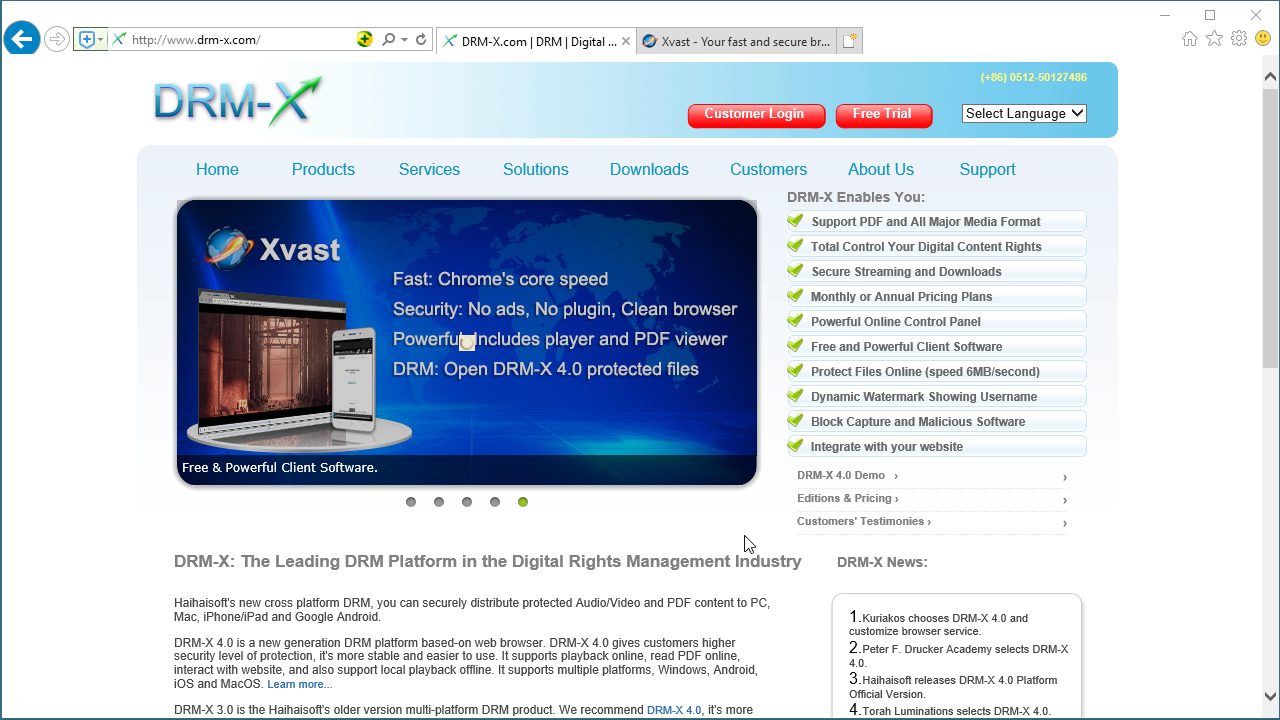 DRM-X 4.0 HTML web page encryption tutorial
With DRM-X 4.0, it encrypts web pages includes html, CSS, JavaScript and images, and control who can view your web content. It stops copying, prevent printing and print screen, and expires content when it should no longer be viewed.
WATCH NOW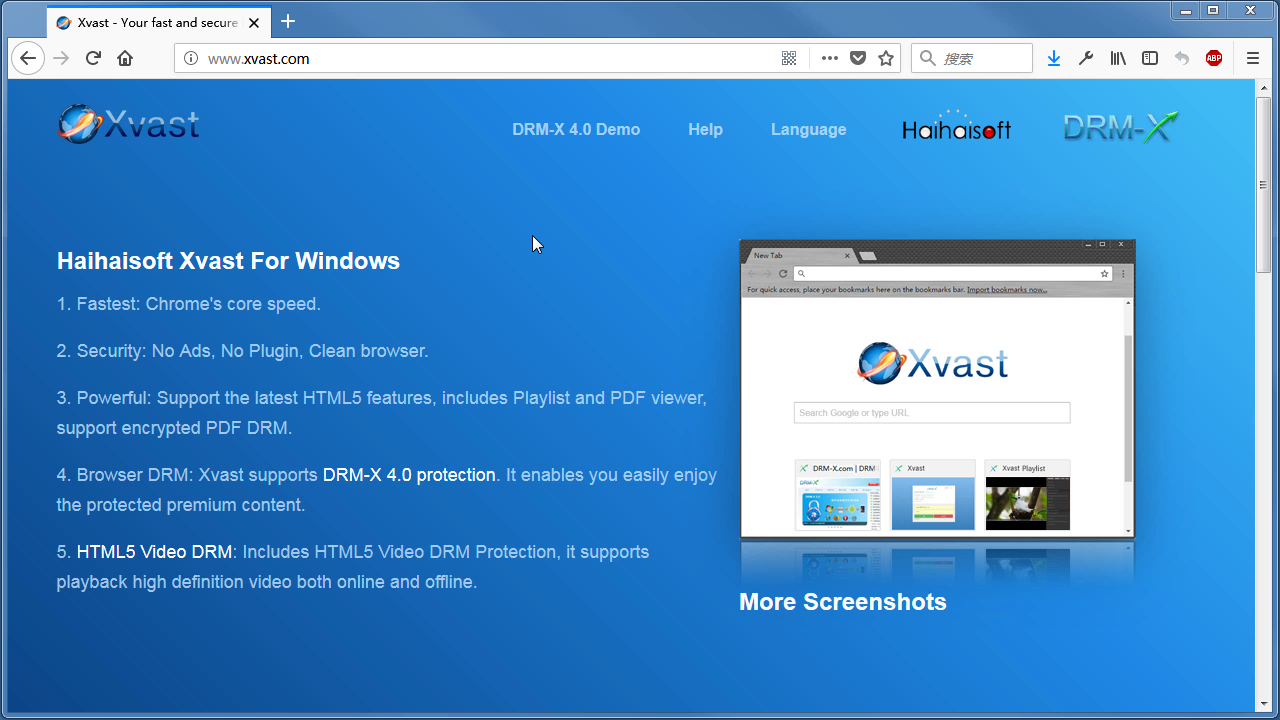 Xvast Windows Video Tutorial
We through the Video show you the demo how to download, install and use Xvast browser, how to open encrypted file and How to solve problems with use.
WATCH NOW DRM-X 4.0 Video Encryption Tutorial
We through the Video show you the demo how to use DRM-X 4.0 platform, how to settings before encryption and How to encrypt video. We will show you how to play encrypted video.
WATCH NOW DRM-X 4.0 integration with WordPress
Custom login page integration is a customer ordered a protected content from your website, when customer plays the content, it will prompt your website customized login page, after customers input Username and Password of your websites account, they will get the license immediately to play the protected file. It requires you create a new DRM login page.
WATCH NOW DRM-X 4.0 Security Settings
When you use DRM-X 4.0 platform, there's something to notice. To make protection safer, please select a series of necessary options to prevent piracy. It's very important to do these settings in the beginning.
WATCH NOWQuestions?
Our reps have answers.
Ask about Haihaisoft products, pricing, implementation, or anything else — our highly trained reps are standing by, ready to help.
Tel: +64 27 507 9959 (New Zealand)
QQ: 1279126286 / 994184623
Contact us on Microsoft Teams
service#haihaisoft.com (replace # into @)
Contact Us